Everyone will tell you to test your RSA copy. Almost nobody has a process for doing it that actually tells them anything.
The problem is structural. RSAs give you up to 15 headlines and 4 descriptions, and Google decides how to combine them. There’s no native A/B toggle. You can’t say “serve headline A to 50% of users and headline B to the other 50%.” You’re working with asset-level signals that lag by days, and by the time Google flags a problem, the budget has already moved on.
So most agencies do one of two things: they skip testing entirely, or they swap copy based on gut feel and call it a test. Without a real google ads copy testing process, neither approach tells you what’s working.
Why RSA Copy Testing Is Harder Than It Looks
With a traditional text ad, testing was simple: two ads, equal rotation, wait for statistical significance. RSAs broke that model.
When you have 15 headlines in play, Google assembles combinations on the fly. Each auction gets three headlines chosen by Google’s prediction of what will perform. You have limited control over what gets served, and reporting reflects assets in aggregate, with no visibility into individual headline matchups.
For years the only signal was Ad Strength labels — Best, Good, Low. They were a poor proxy. An Optmyzr study across 20,000 accounts found that ads rated “Excellent” had the worst CPA, while “Poor”-rated ads delivered the best ROAS. Ad Strength measured asset variety, not conversion performance.
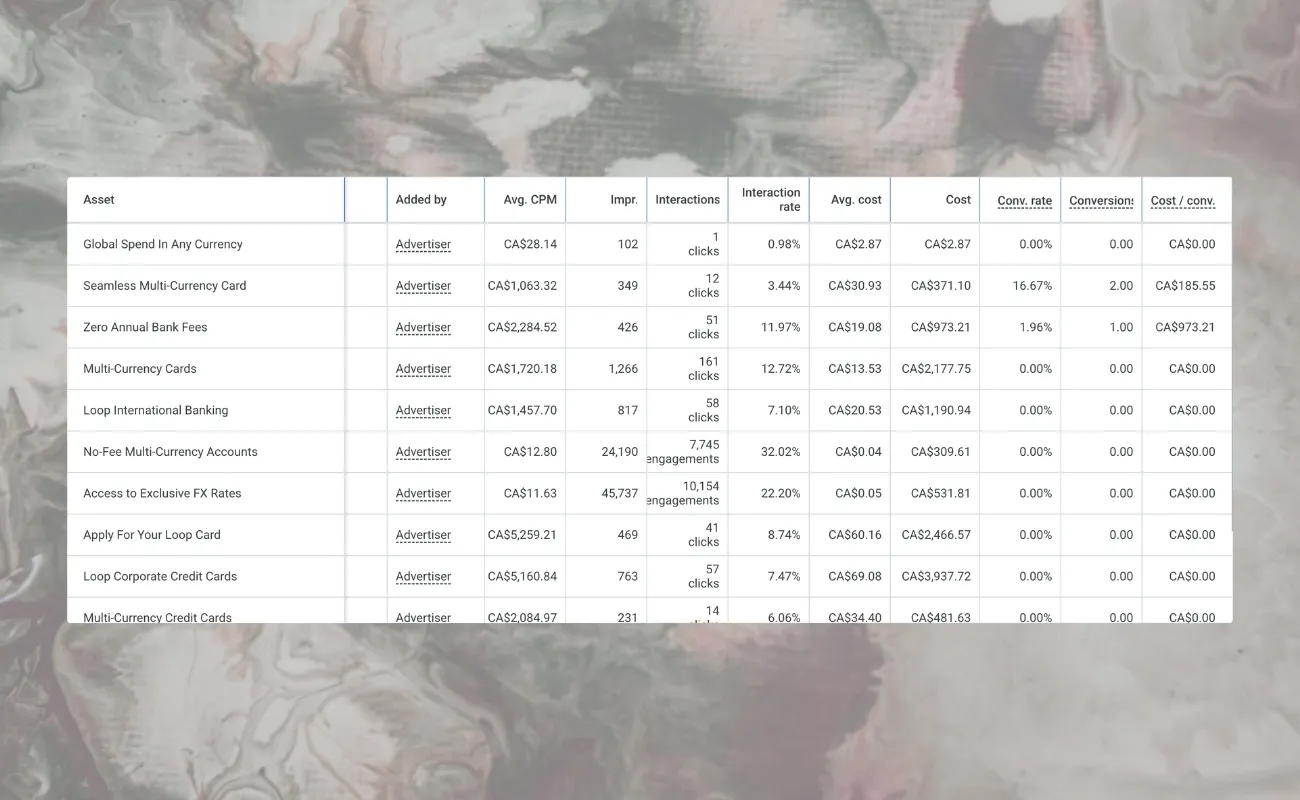
Google has since replaced the label system with per-headline click and conversion data. You can now see exactly which headlines drive clicks and which ones convert: Campaigns > Assets > Performance tab, filter to Headline.
Three Tools, and When to Use Each
Google Ads Campaign Experiments
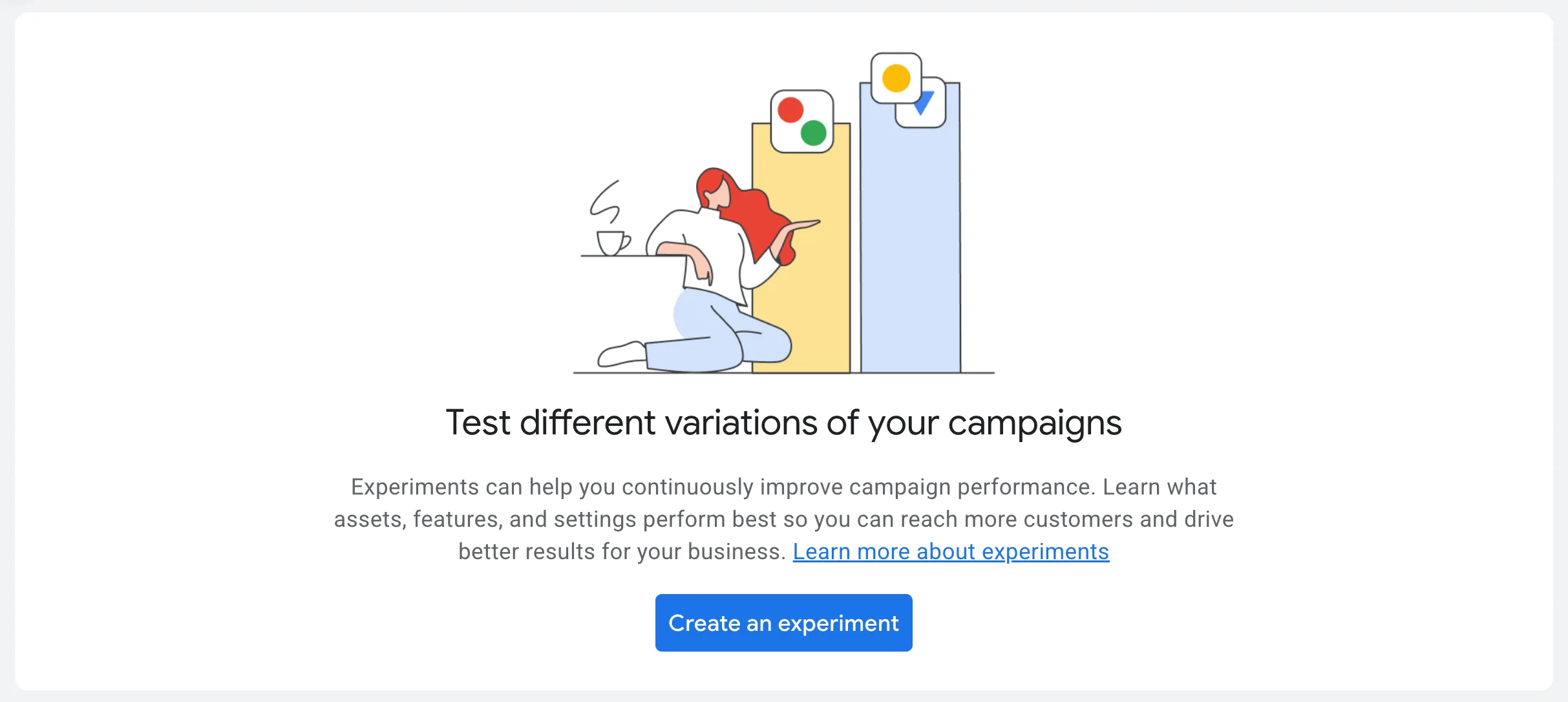
Google’s native split-testing tool. You duplicate a campaign, split traffic between a control and an experiment (say, 50/50), and get statistically meaningful results.
Campaign Experiments is built for bidding and budget tests, not copy-specific ones. Isolating copy means duplicating an entire campaign, which is overhead for routine headline iteration.
When I would use it:
- Testing a fundamentally different copy angle that warrants a full campaign comparison
- Bidding strategy tests where I also want to validate a messaging change at the same time
- Any situation where I need statistically significant results, not just directional signals
Adalysis
The most purpose-built tool for managing RSA copy tests. Adalysis streamlines duplicating RSAs, labeling variants, and surfacing performance data that’s harder to pull from Google’s native interface. If you’re running tests across multiple ad groups and accounts, it reduces the manual overhead significantly.
What it doesn’t do: run a controlled traffic split. Google still controls serving. You get better workflow management and reporting, not a deterministic experiment. Starts at $149/month, 14-day free trial. Real learning curve.
When I would use it:
- Running copy tests across multiple ad groups or accounts simultaneously
- Any account where I need to track more tests than a spreadsheet handles without errors
- Agencies where someone else set up the test and I need to audit what’s running
Google Ads Ad Variations
Find-and-replace text across multiple ads at scale. Useful for bulk copy updates, not for controlled testing: no traffic split, no statistical significance, no variable isolation.
When I would use it:
- Never, for copy testing
- For bulk copy updates across campaigns, yes; for controlled experiments, no
How to Structure a Copy Test That Gets a Signal
Start with a hypothesis. Vague intent produces vague results. A real hypothesis: “Value-prop headlines mentioning turnaround time will outperform urgency headlines mentioning deadlines for this service campaign.” Now you know what you’re measuring and why.
One setup rule before you vary anything: keep your descriptions identical across the control and variant ads. Descriptions are a second variable. If you change them alongside headlines, you can’t isolate what drove the result. Lock them down for the duration of the test.
Vary one thing at a time:
| Test variable | Measurement metric |
|---|---|
| Core value prop (speed vs. quality vs. price) | Asset-level conversions / CPA |
| CTA verb (Get / Start / Try / See) | Asset-level CTR |
| Social proof vs. outcome framing | Asset-level conversions |
| Headline length (<20 chars vs. longer) | CPA / cost per lead |
| Sentence case vs. title case | Asset-level CTR |
| Specificity (“Save 3 hours” vs. “Save time”) | CTR + conversion rate |
Two data points worth testing in your own accounts: the Optmyzr study found headlines under 20 characters had nearly half the CPA of longer ones, and sentence case outperformed title case by 3.7x on CPA. Don’t assume the averages hold, but both are worth validating.
Give each headline enough runway to show a pattern. On lower-traffic campaigns that can take weeks. If a test stays inconclusive long after it should have resolved, move the budget, update the copy, and start a cleaner test.
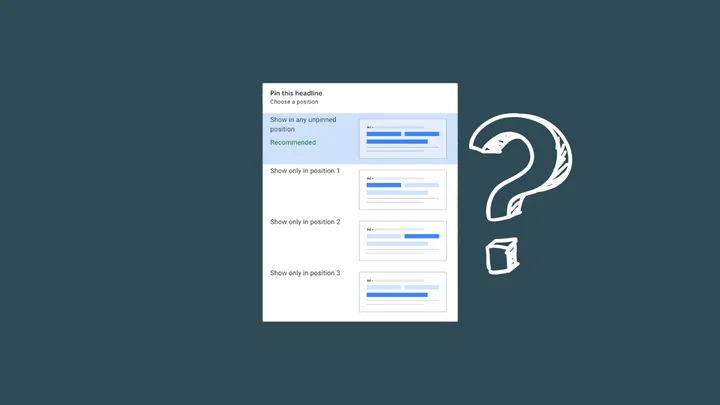
Sort out pinning before anything goes live. Pin position 1 with your primary hypothesis headline. Leave positions 2 and 3 open for Google to optimize. Partial pinning outperforms full pinning; fully locking all three positions hurts performance.
For more on writing RSA headlines that actually get served, that post goes deeper on structure and character length.
The Copy Variant Problem: What Breaks Most RSA Tests
You have Adalysis set up. Your Campaign Experiments are ready. Then you sit down to write 15 headlines for the test and spend 90 minutes producing copy you’re not fully confident in.
That’s where most RSA testing fails, and it happens before a single impression.
Testing weak variants produces one of two outcomes: no signal because nothing differentiates, or false conclusions. Cut a weak headline and replace it with another weak one, and you’ve learned nothing.
This is where 30characters fits. Paste your landing page URL and it generates 15 RSA headline variants in 60 seconds, all character-validated and written for the RSA format. Each set covers distinct angles: speed, social proof, outcome, objection handling, specificity. You get real test candidates across different hypotheses, not minor variations of the same headline.
You’re not starting from a blank doc; you’re starting from a set of candidates to sort, select, and slot into your test. If you’re running tests across 10+ client accounts, that production speed compounds.
Try 30characters free: get 15 headlines to test in 60 seconds →
Reading Performance Data and Cutting Losers
Give the test time. RSA testing is slower than traditional ad testing because Google controls serving. For Campaign Experiments, wait until Google flags statistical significance before reading results.
Google now gives you click and conversion data per headline. Go to Campaigns > Assets > Performance tab, filter to Headline. Cut headlines with high impressions and poor conversion rates. Protect headlines that convert.
When you cut a headline, replace it immediately with the next variant from your list. Having 15 well-written candidates at the start means you’re not scrambling to write new copy mid-test.
Running Copy Tests at Scale Across Client Accounts
The process above works for one campaign. The challenge for agencies is running it systematically across 10, 20, or 30 accounts without losing track of what’s being tested where.
Standardize the hypothesis format: Use a template: [What you’re testing] + [Expected direction] + [Metric you’ll measure]. Takes two minutes per test; prevents post-mortem confusion weeks later.
Keep a copy test log: A shared doc or spreadsheet with active tests, start dates, and results. Not glamorous, but essential when tests overlap across accounts and months.
Set a review cadence: Build RSA copy review into your monthly account audit alongside your negative keyword reviews. Adalysis sends alerts; Google’s per-headline view requires you to go looking.
Batch variant production: If you’re launching tests across five campaigns at once, produce all the copy in one session. 30characters handles this in bulk: paste multiple URLs, get headline variants for each. You’re distributing copy across campaigns, not writing from scratch per client.
What a Clean RSA Testing Process Looks Like
A clean process: a documented hypothesis before each test, identical descriptions across variants, one variable changed at a time, and enough runway before any cut decision.
The tools slot in around that structure. Google’s per-headline data handles measurement. Campaign Experiments handles controlled splits for high-stakes tests. Adalysis handles the workflow when you’re managing tests at scale.
The part that breaks most often is the writing. Ninety minutes producing weak copy before a test starts is an upstream problem. Fixing it is faster than most people expect.
The testing framework only works when you have strong variants to start from. 30characters generates 15 validated RSA headlines from your landing page URL in 60 seconds, built for the agencies doing this across 30 clients a month. Try it free →